" transform="translate(4 4)" width="16px"/></svg>)
The Challenge
How?
My Role
As a Product Designer, I led both research and design to simplify the ecosystem and improve tools for Red Bull’s global teams.
I collaborated closely with the Red Bull team and stakeholders to align research, design, and product strategy.
Key Metrics
Task completion time for key workflows across apps.
Number of support requests during user onboarding (first 3 months).
Number of publishing errors (especially those related to not following new directives)
Research
To build a deep understanding of the problem, I carried out a multi-layered research process:
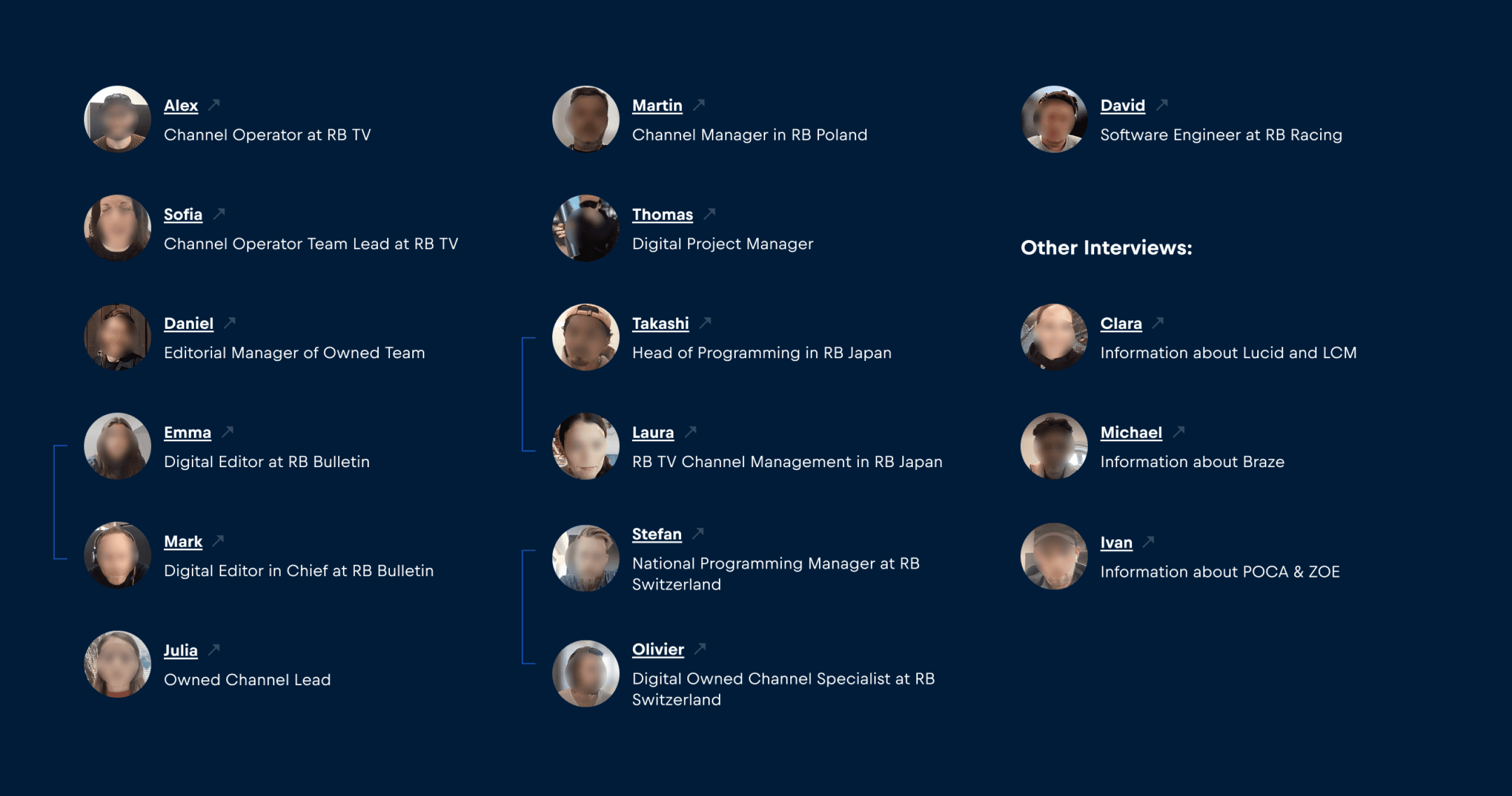
To protect the interviewees’ privacy, their faces have been blurred.
To protect the interviewees’ privacy, their faces have been blurred.
A clear set of pain points emerged:
" width="18px"><path d="M 0 3 C 0 1.343 1.343 0 3 0 C 4.657 0 6 1.343 6 3 C 6 4.657 4.657 6 3 6 C 1.343 6 0 4.657 0 3 Z" fill="transparent" height="6px" id="jkxpzfe4k" stroke-dasharray="" stroke-linecap="round" stroke-linejoin="round" stroke-width="1.5" stroke="rgb(25, 0, 255)" transform="translate(6 6)" width="6px"/><path d="M 9 13.5 C 9 15.985 6.985 18 4.5 18 C 2.015 18 0 15.985 0 13.5 C 0 11.015 2.015 9 4.5 9 C 2.015 9 0 6.985 0 4.5 C 0 2.015 2.015 0 4.5 0 C 6.985 0 9 2.015 9 4.5 C 9 2.015 11.015 0 13.5 0 C 15.985 0 18 2.015 18 4.5 C 18 6.985 15.985 9 13.5 9 C 15.985 9 18 11.015 18 13.5 C 18 15.985 15.985 18 13.5 18 C 11.015 18 9 15.985 9 13.5 M 9 4.5 L 9 6 M 4.5 9 L 6 9 M 13.5 9 L 12 9 M 9 13.5 L 9 12 M 5 5 L 6.88 6.88 M 11.12 6.88 L 13 5 M 5 13 L 6.88 11.12 M 11.12 11.12 L 13 13" fill="transparent" height="18px" id="cZnkpTY00" stroke-dasharray="" stroke-linecap="round" stroke-linejoin="round" stroke-width="1.5" stroke="rgb(25, 0, 255)" width="18px"/></g></svg>)
Goals & Design Strategy
After doing Research we could start with a set of requirements for Red Bull's app ecosystem:
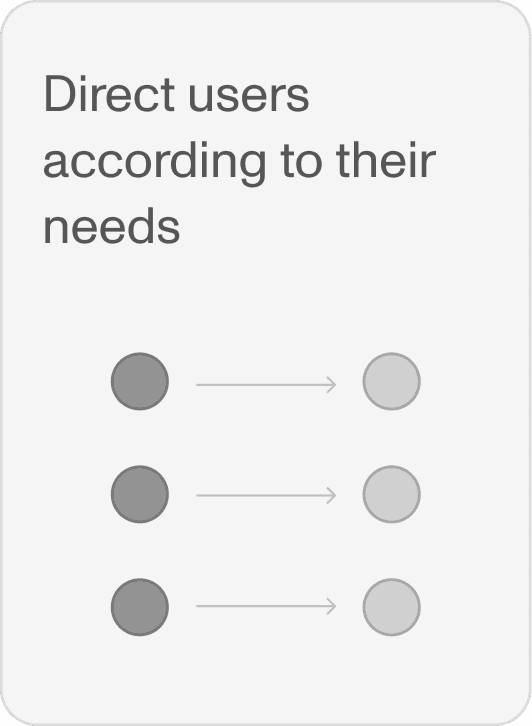
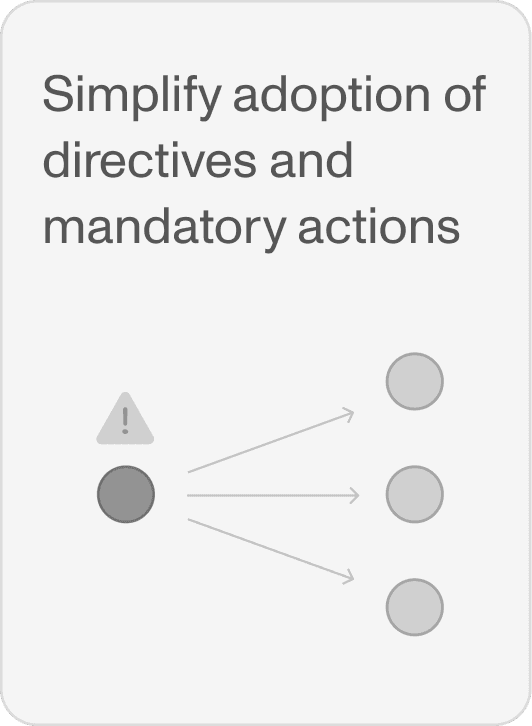
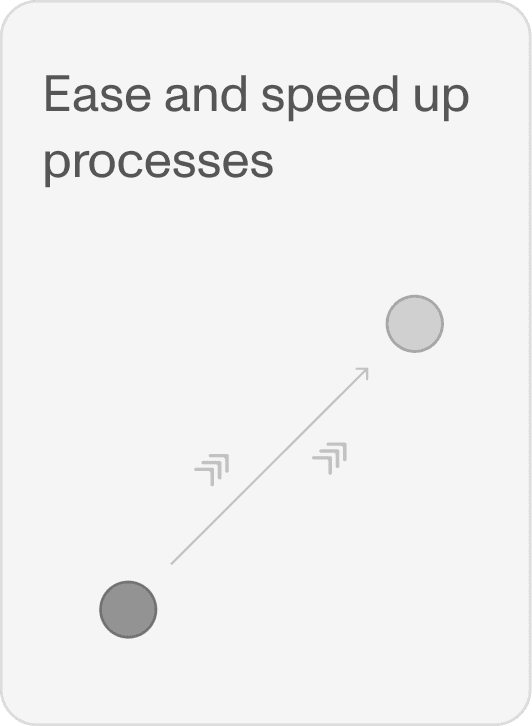
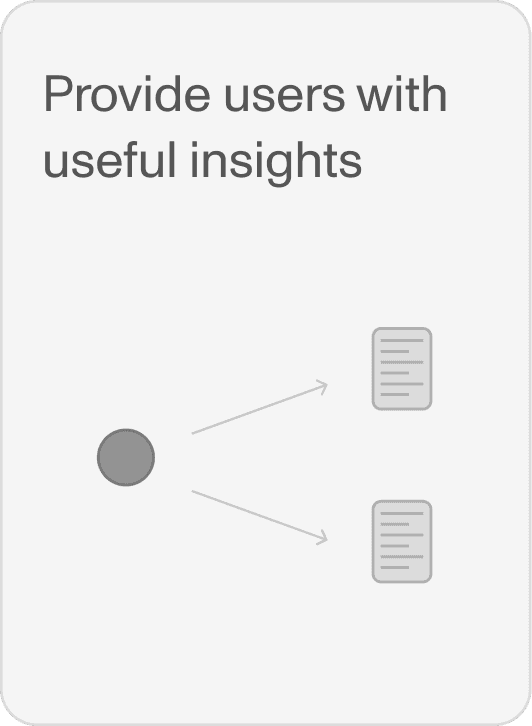
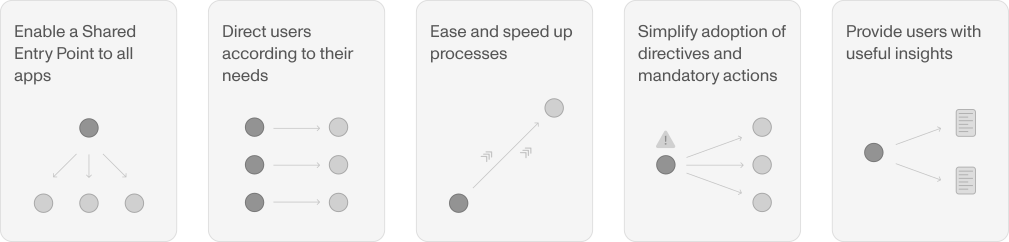
Our strategy was to reduce friction and bring intelligence into existing workflows. We explored how to unify and extend current tools, especially the Editor App, which is the most relevant application as it already covered 80% of user activity.
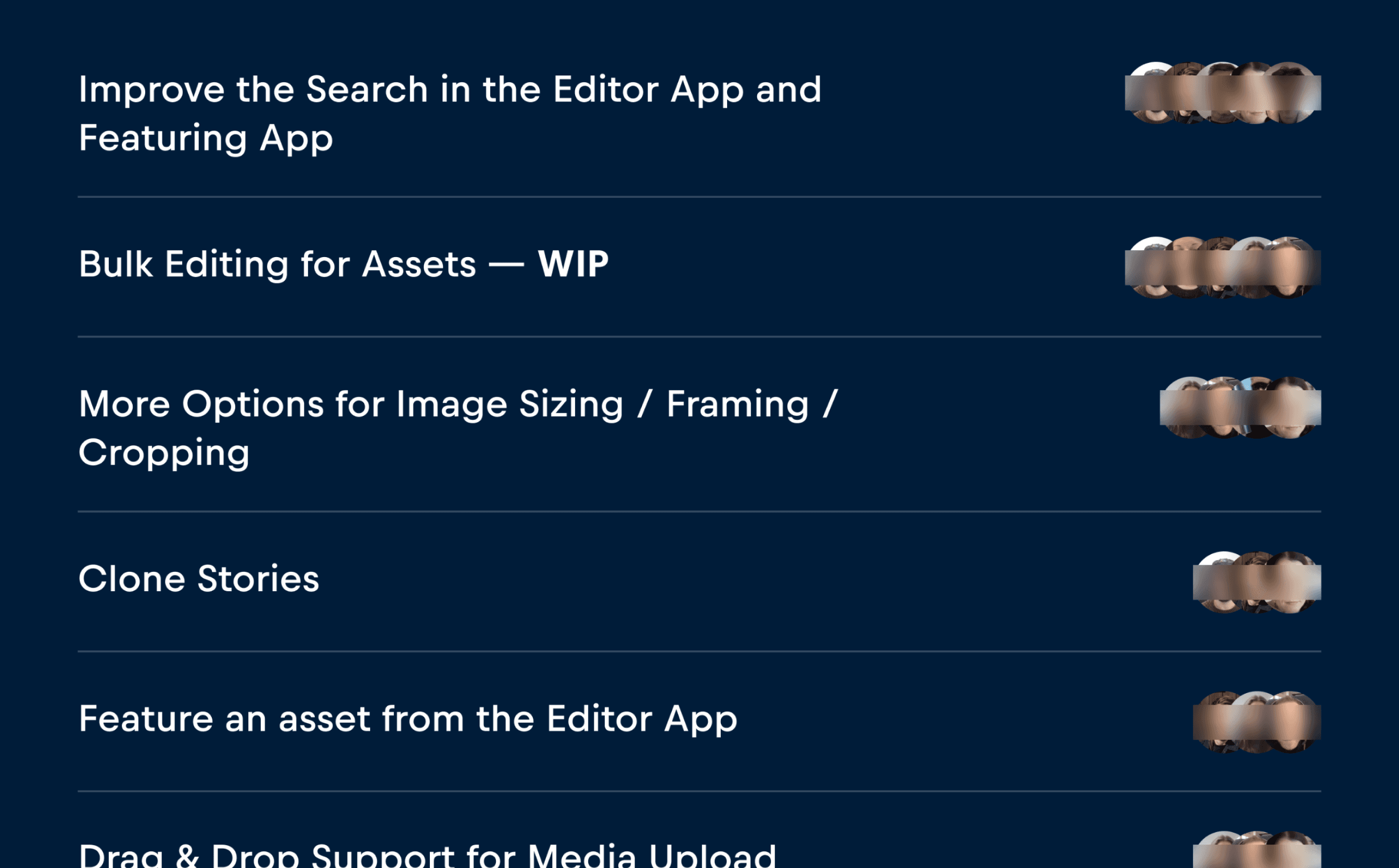
Slide from a deck I created to present user sentiment. The right side shows which participants shared the same pain points.
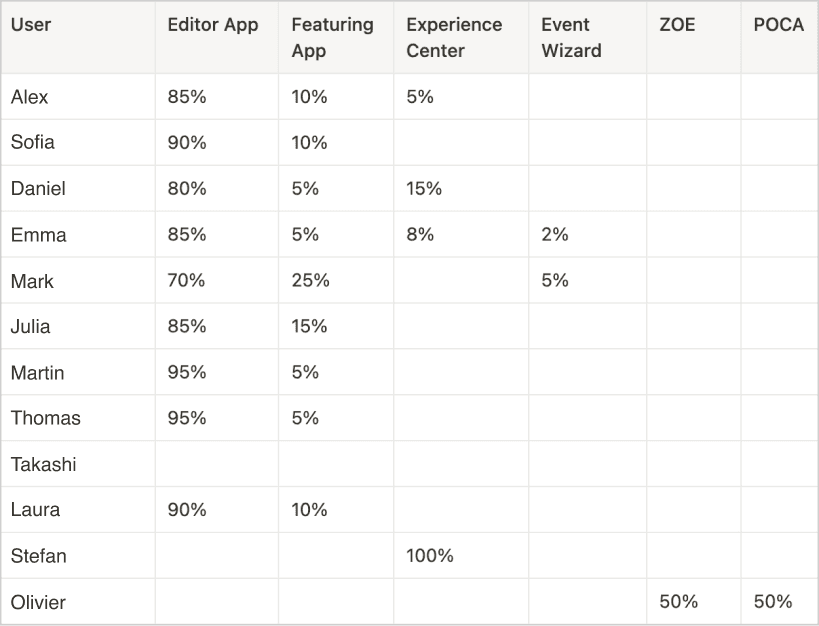
Document from my user research showing the percentage of time each participant spent on each app.
After reviewing all the research documentation, I needed to start drawing conclusions and forming hypotheses, and in doing so we uncovered insights that slightly shifted the project’s focus. By clustering the requirements, clear themes emerged: faster workflows, smarter editor options, better content discovery, and improved visibility.
Some examples of these requirements that later would be part of the design strategy:
All requirements were clustered into two directions:
General Solutions
Solutions that solve more than 1 requirement. For example, we have 5 requirements from users that could get solved with the implementation of a Notification Center. The Notification Center is a general solution, and so it is the Quick Action Bar.
Specific in-app Solutions
Solutions that tackle existing problems from within existing tools. For example, the implementation of Bulk Editing in the Editor App, or repairing things that don’t work.
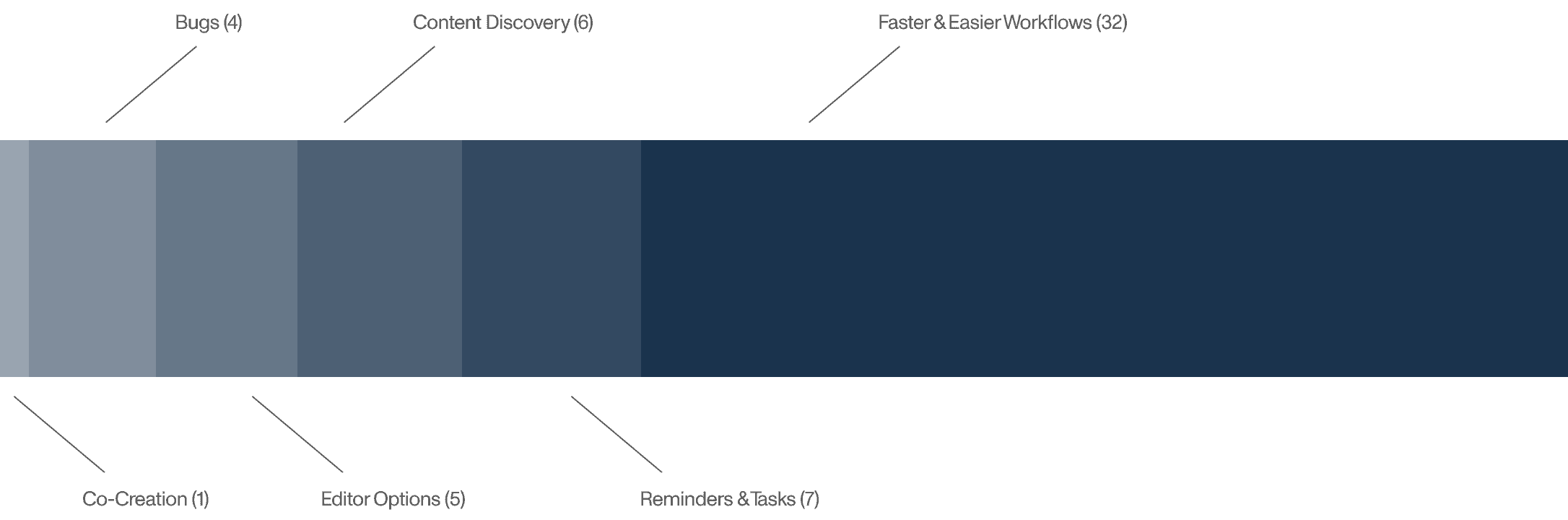
I proposed a set of interconnected solutions and features, what we called solution starters, that directly addressed pain points from research:
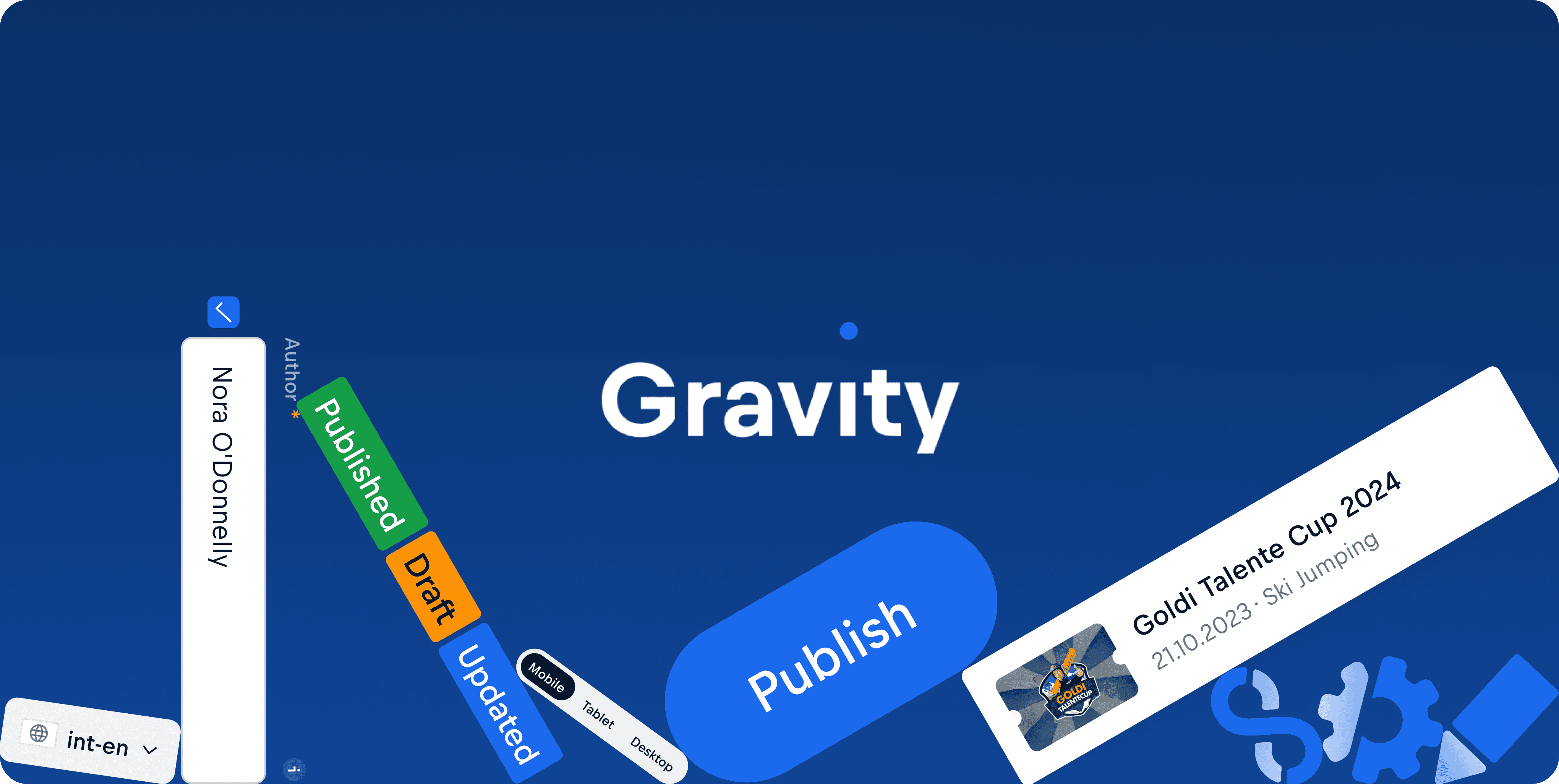
New Design System: “Gravity”
We introduced Gravity, a design system built on Red Bull’s existing foundations and adapted for complex backend workflows. It unified interaction patterns across applications, reducing cognitive load and improving usability, while also bringing scalability.
I contributed by proposing ideas, testing components, and defining new ones, while a teammate led the system’s implementation.
Unified Navigation across all apps
Each application had its own navigation logic, making the ecosystem difficult to scale. We introduced a unified navigation bar across all apps, standardizing core elements while allowing product-specific customization.
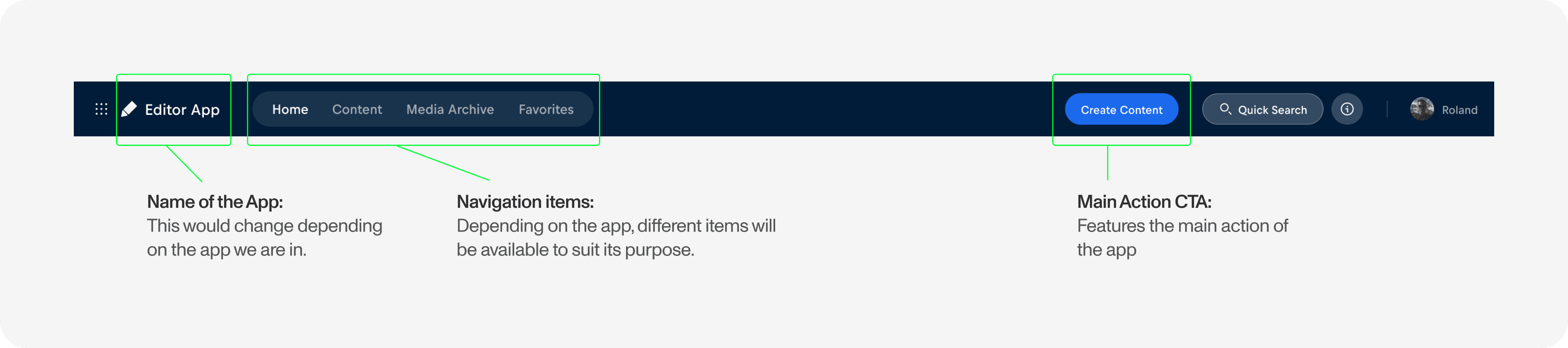
Here are examples of how the navigation bar would scale and adapt across different applications in the ecosystem.





A Shared Entry Point for All Apps: Ecosystem Hub
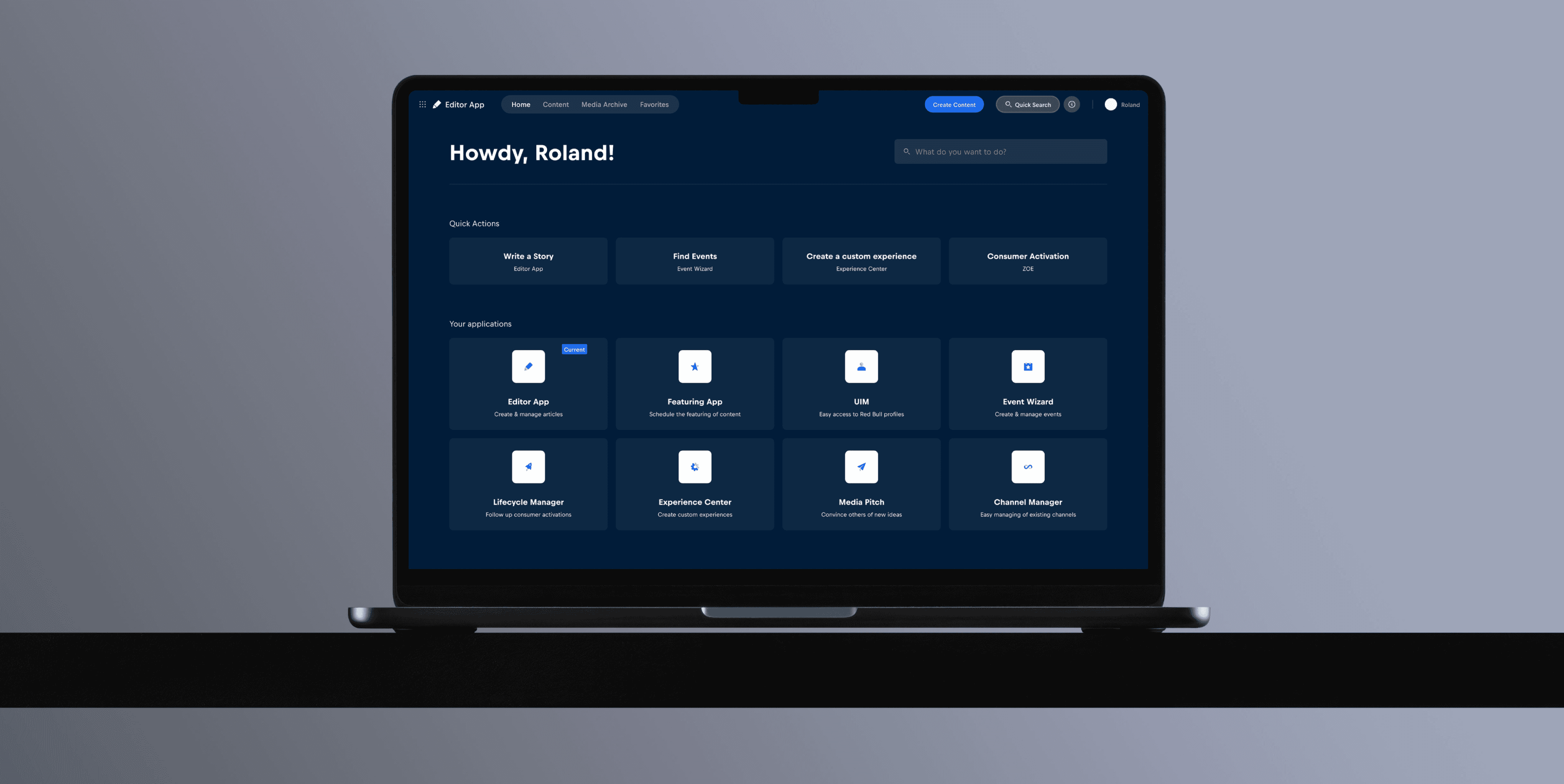
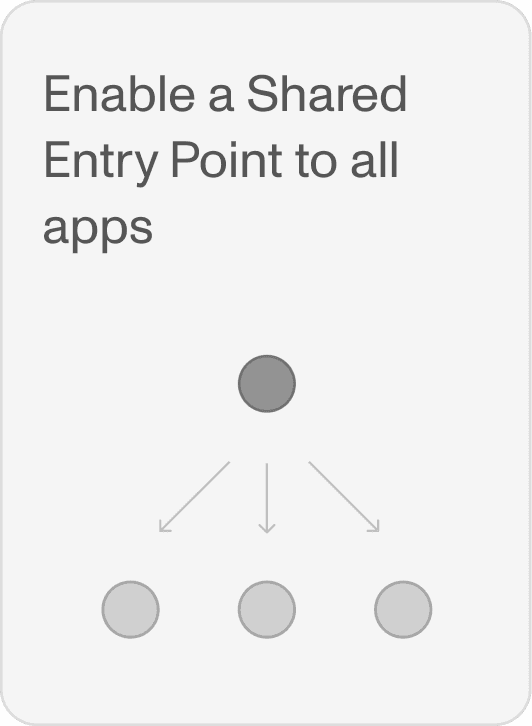
I created a unified homescreen as a shared entry point to the ecosystem. Users could see quick actions, access the apps relevant to their user role, and have a more guided experience. This not only made the ecosystem more approachable but also set the foundation for scalability.

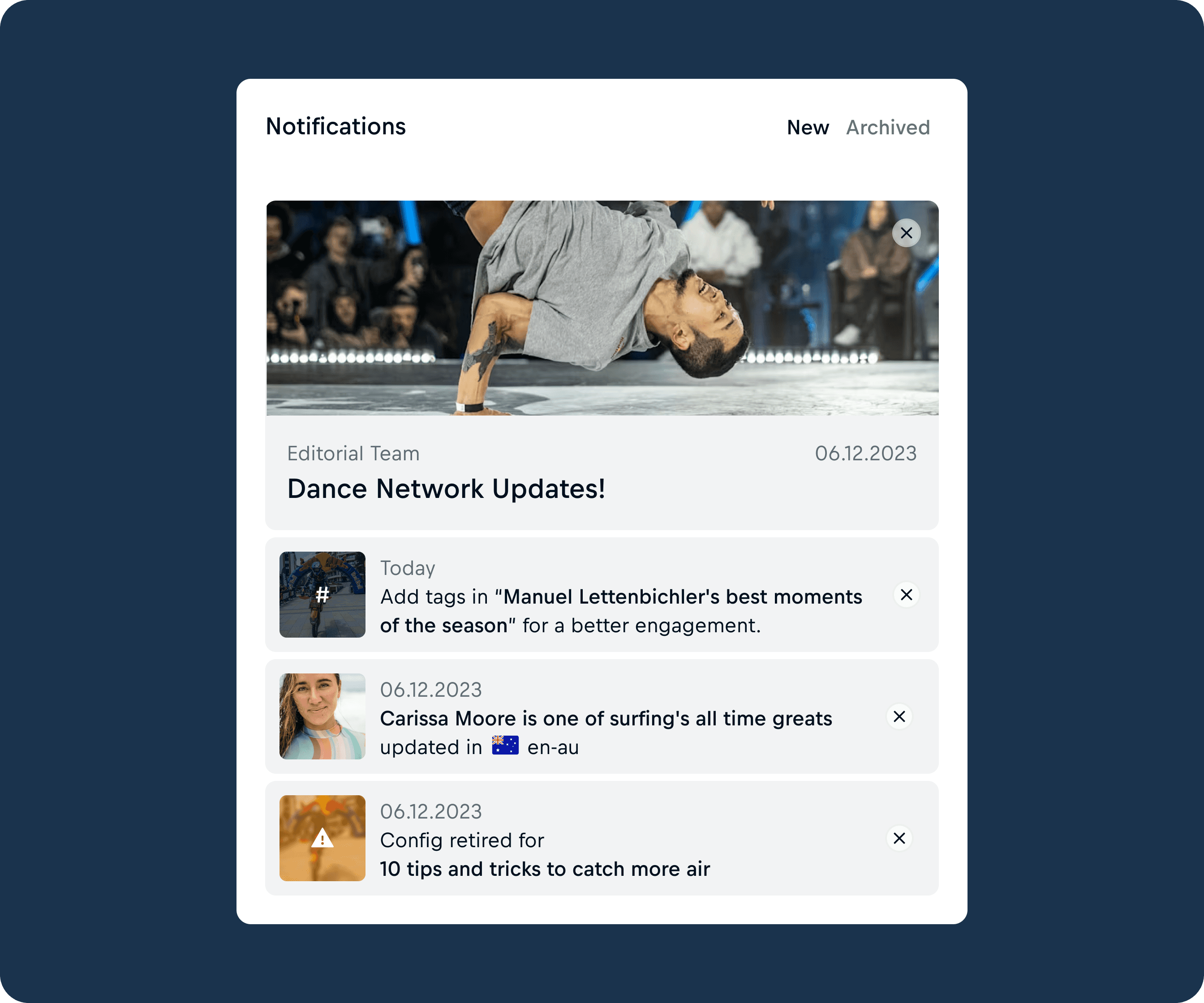
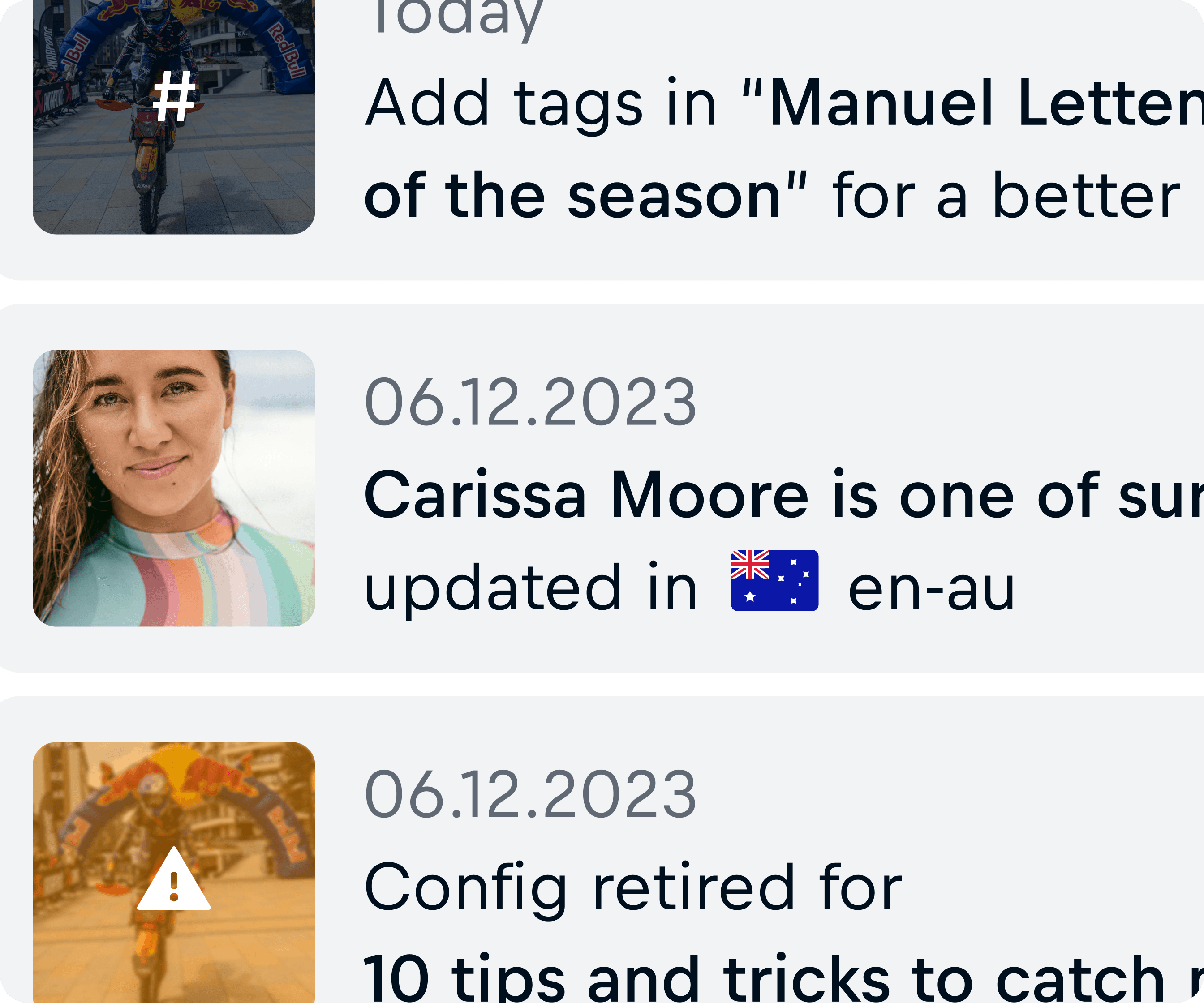
Notification Centre
Red Bull lacked a system for internal announcements. We introduced a cross-app Notification Centre to deliver timely updates, reminders, and insights directly within user workflows.
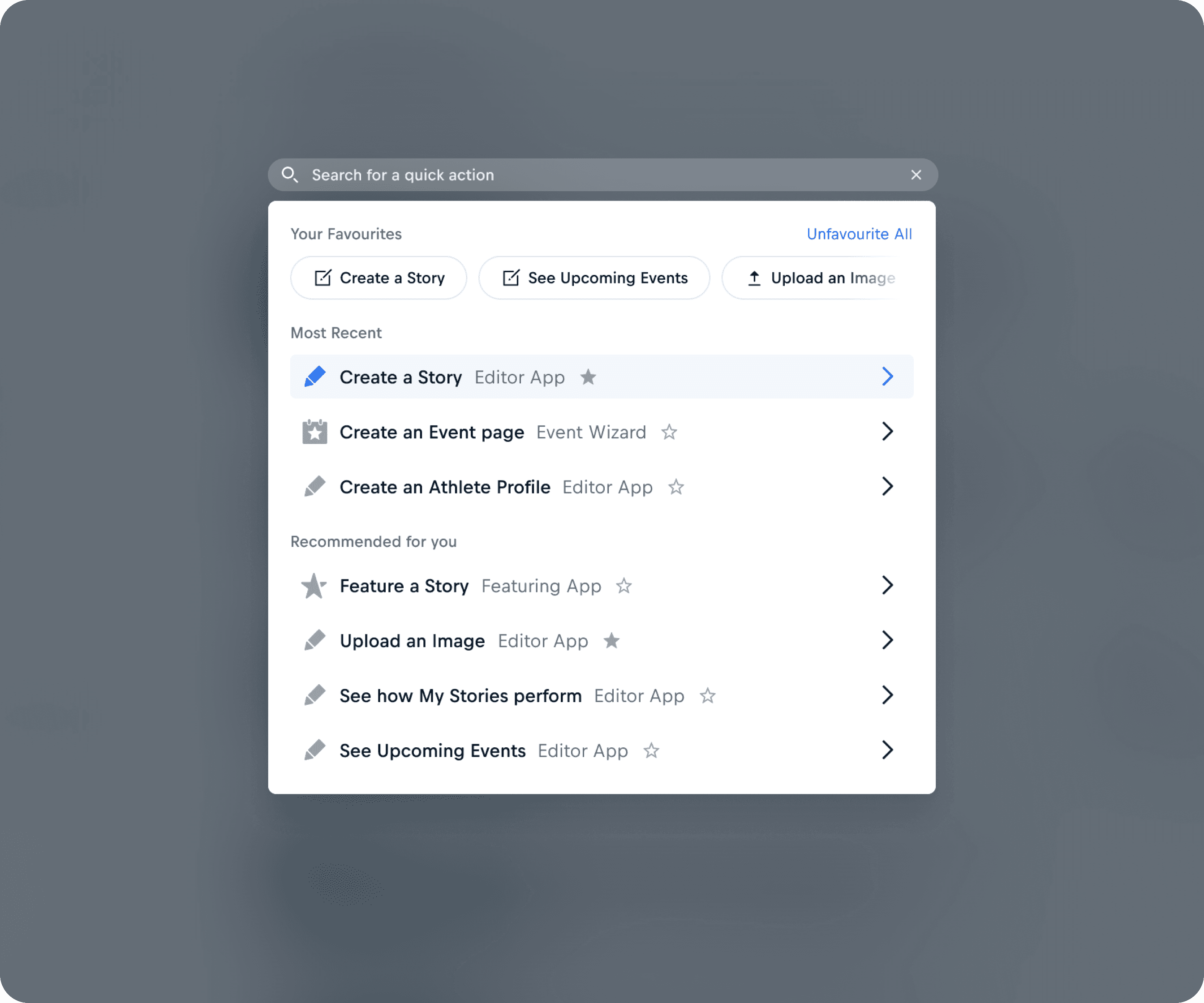
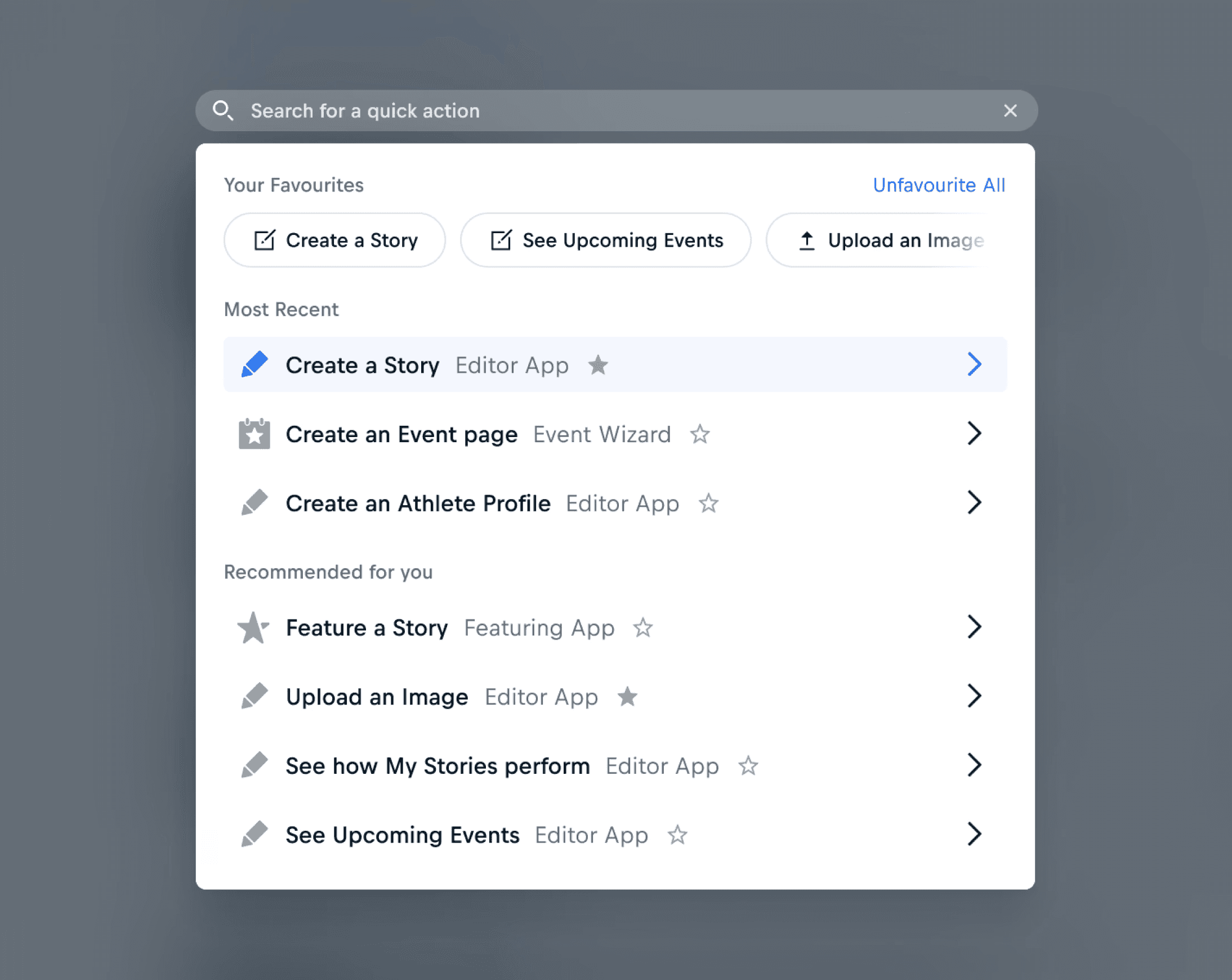
Quick Action Bar
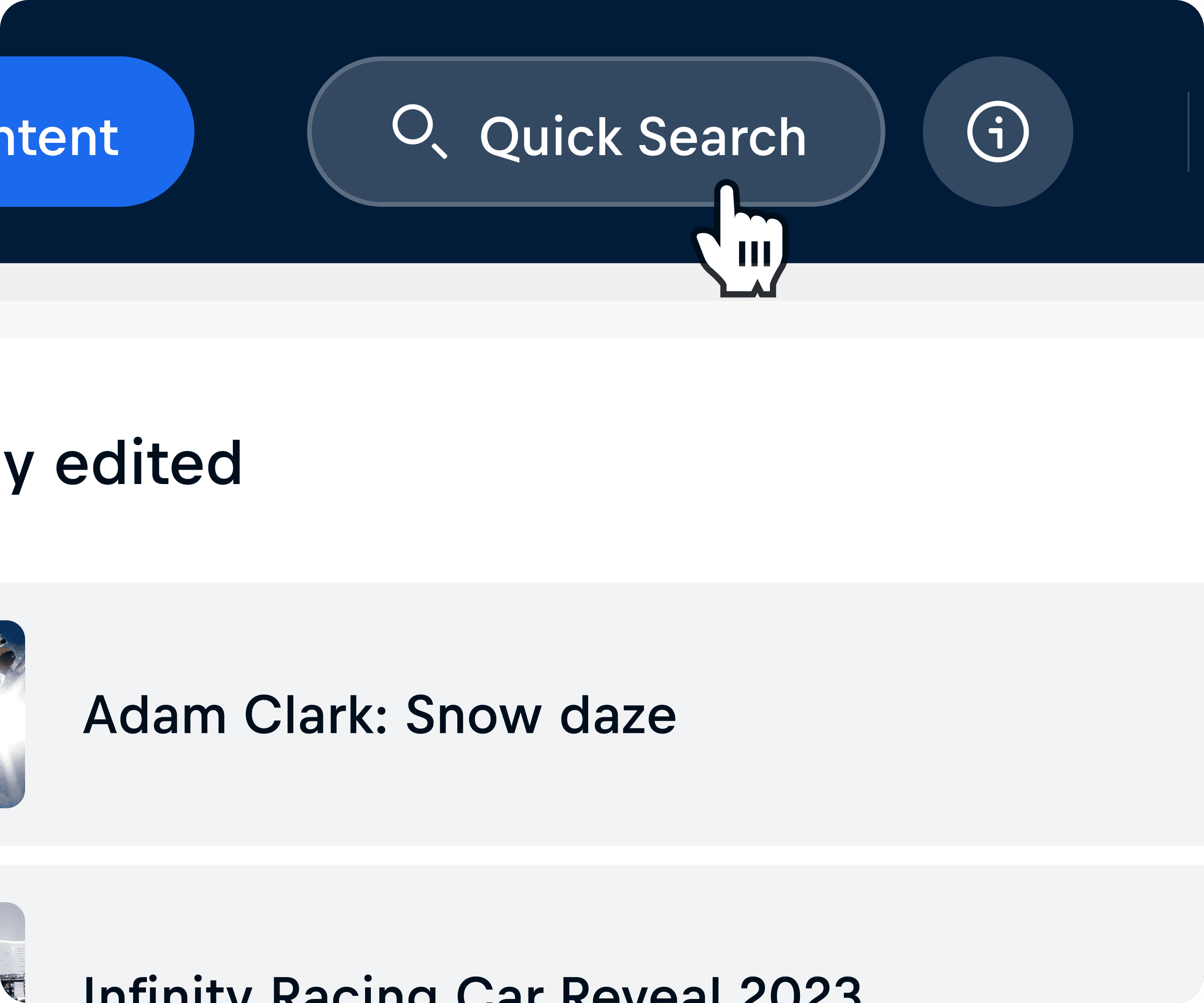
To reduce friction, especially for new users, we introduced a Quick Action Bar integrated into the navigation. This allowed users to perform frequent actions such as creating stories, uploading media, or checking upcoming events without having to guess which application to open. It streamlined onboarding and simplified recurring tasks.
When the user clicks on Quick Search, the Quick Action Bar opens in the center of the screen in focus mode, blurring the background while keeping the navigation bar visible.
Impact & Learnings
By introducing these design solutions, the project directly addressed Red Bull’s goals of reducing friction, streamlining workflows, and designing for scalability.
These solutions gave users consistent patterns across apps, seamless transitions within the ecosystem, faster access to frequent actions, and timely feedback through notifications, ultimately improving efficiency while laying the foundation for a unified and future-proof platform.
41%
Quicker onboardings for new users.
64%
Reduction in support tickets
28%
Fewer publishing errors
This project underlined the importance of balancing user needs with organizational strategy. By resisting the temptation to add a new product, we instead delivered a vision for simplifying and strengthening what was already in place.
The process also highlighted how critical it is to involve diverse user groups in research. Insights from editors in Japan, programmers in Switzerland, and engineers at RB Racing all converged to shape a solution that worked globally.
In the end, the project wasn’t just about new features. It was about a mindset shift: from building more to building smarter, turning Red Bull’s complex ecosystem into a unified, future-proof platform for Owned Media.

Check my other projects:
 rotate(-45 12 12)" width="24px"><path d="M 0 0 L 24 0 L 24 24 L 0 24 Z" fill="transparent" height="24px" id="WVJmnSLB7" width="24px"/><path d="M 16.063 0 C 14.962 2.624 14.201 5.272 13.78 7.943 C 13.358 10.634 13.27 13.367 13.517 16.08 C 13.415 16.004 13.317 15.924 13.222 15.84 C 13.096 15.728 12.974 15.612 12.856 15.492 C 11.963 14.599 11.293 13.436 10.846 12.002 C 10.398 10.569 10.173 8.853 10.172 6.855 L 3.027 13.999 L 2.081 13.053 L 9.225 5.908 C 7.203 5.907 5.484 5.685 4.068 5.244 C 2.654 4.802 1.487 4.124 0.57 3.207 C 0.444 3.082 0.322 2.954 0.204 2.822 C 0.13 2.74 0.062 2.653 0 2.562 C 2.778 2.809 5.5 2.718 8.164 2.291 C 10.88 1.849 13.532 1.08 16.063 0 Z" fill="rgb(0, 0, 0)" height="16.080000000000002px" id="YER7fQDwI" transform="translate(3.446 4.473)" width="16.063000000000002px"/></g></svg>)

" height="16.080000000000002px" id="QnMphaiO1" transform="translate(3.446 4.473)" width="16.063000000000002px"/></g></svg>)